Define what cannot change
I fixed the learning objective, emotional beats, character identities, wardrobe, environments, palette, recurring props, and the visual behavior of the spark.
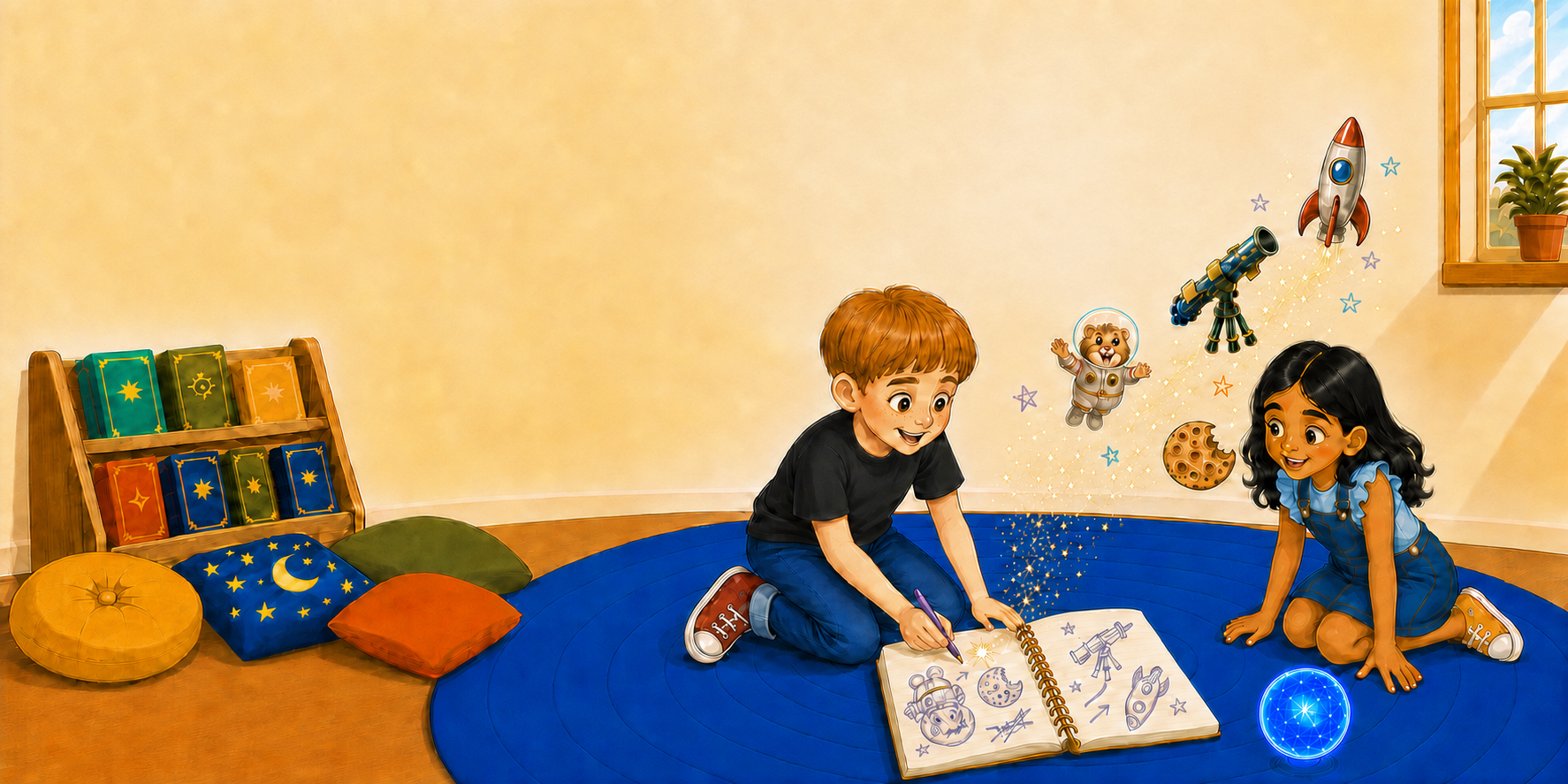
A children’s book about AI, creativity, and the ideas only you can make. I developed it through a complete generative production process that I directed and reviewed from beginning to end.
I began this book by thinking about the future my two-and-a-half-year-old son will enter. I want him to use new tools with care, keep thinking for himself, and protect the social skills that turn ideas into conversations.
That personal connection shaped the cast. Nico’s physical features were inspired by my son, and Ms. Rivera’s appearance was inspired by my own. The story remains universal. Nico uses AI to create a perfect moon project, then learns to add back the memories, questions, jokes, and wonderfully messy details that make the work his own.
The book is published and available through Amazon KDP.
View the published book on Amazon ↗The mobile listing keeps the proof of publication visible without taking over the case study. The portfolio remains focused on the creative process behind the book.
View the published book on Amazon ↗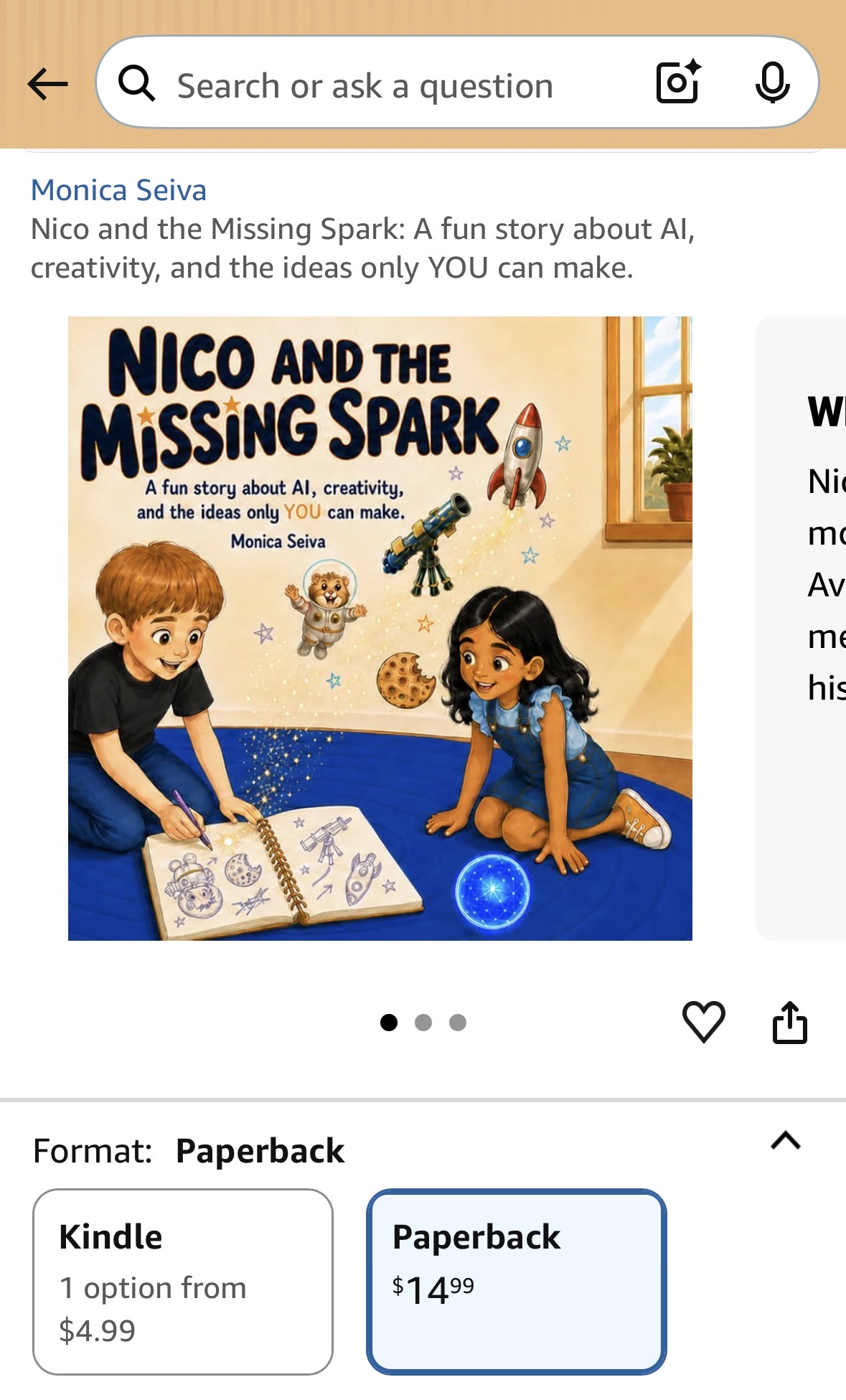
Generative AI can produce images quickly, but it does not keep details consistent on its own. I turned the story’s intent into visual references, clear limits, review criteria, and specific decisions about what to accept.
I fixed the learning objective, emotional beats, character identities, wardrobe, environments, palette, recurring props, and the visual behavior of the spark.
Character boards and approved scenes became the source of truth for proportions, hair, skin tones, clothing, footwear, and classroom details.
I checked each version for anatomy, changes in character identity, object direction, texture errors, story alignment, composition, and print safety.
When several edits left visible residue, I rebuilt the page from the beginning instead of letting small errors build up.
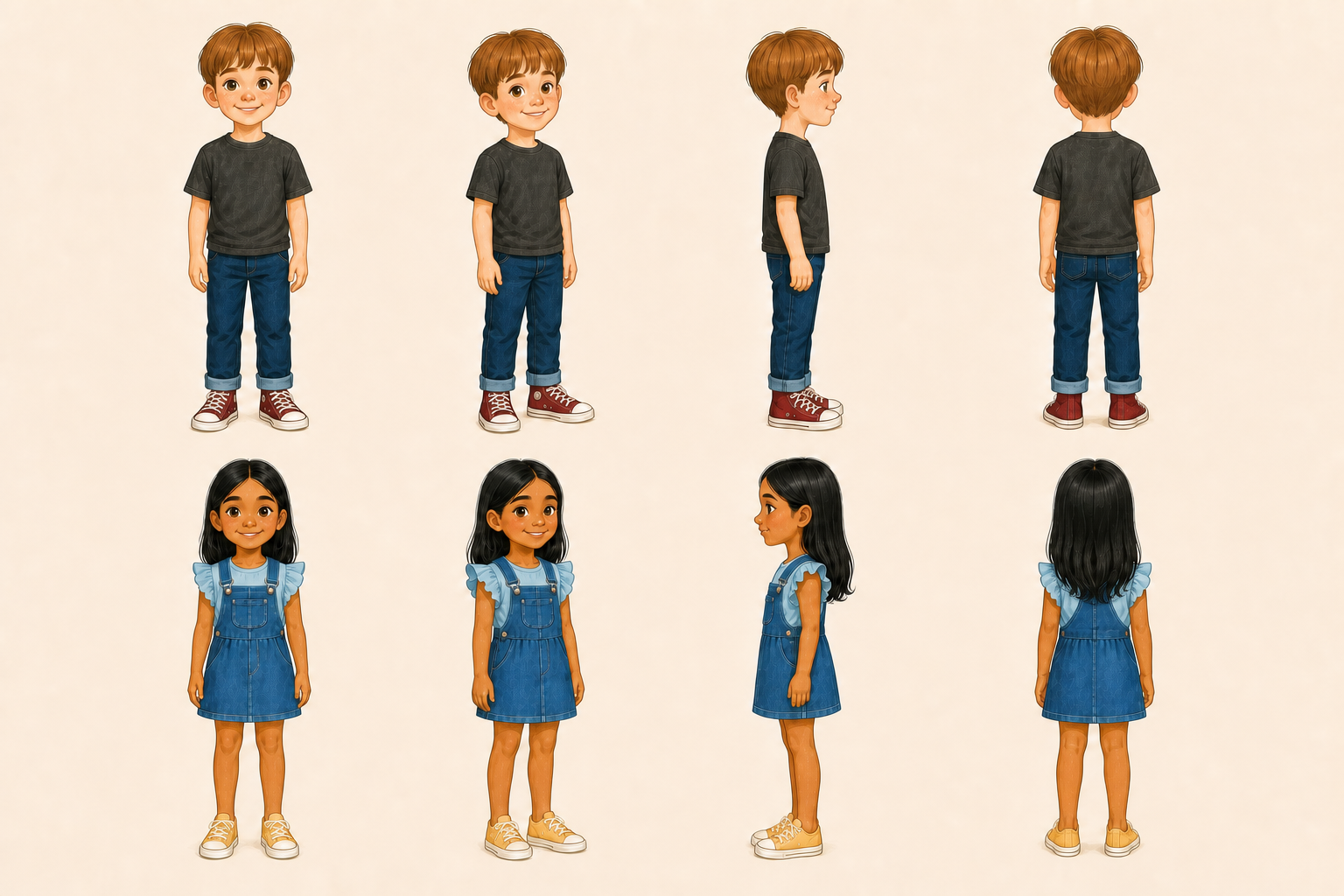
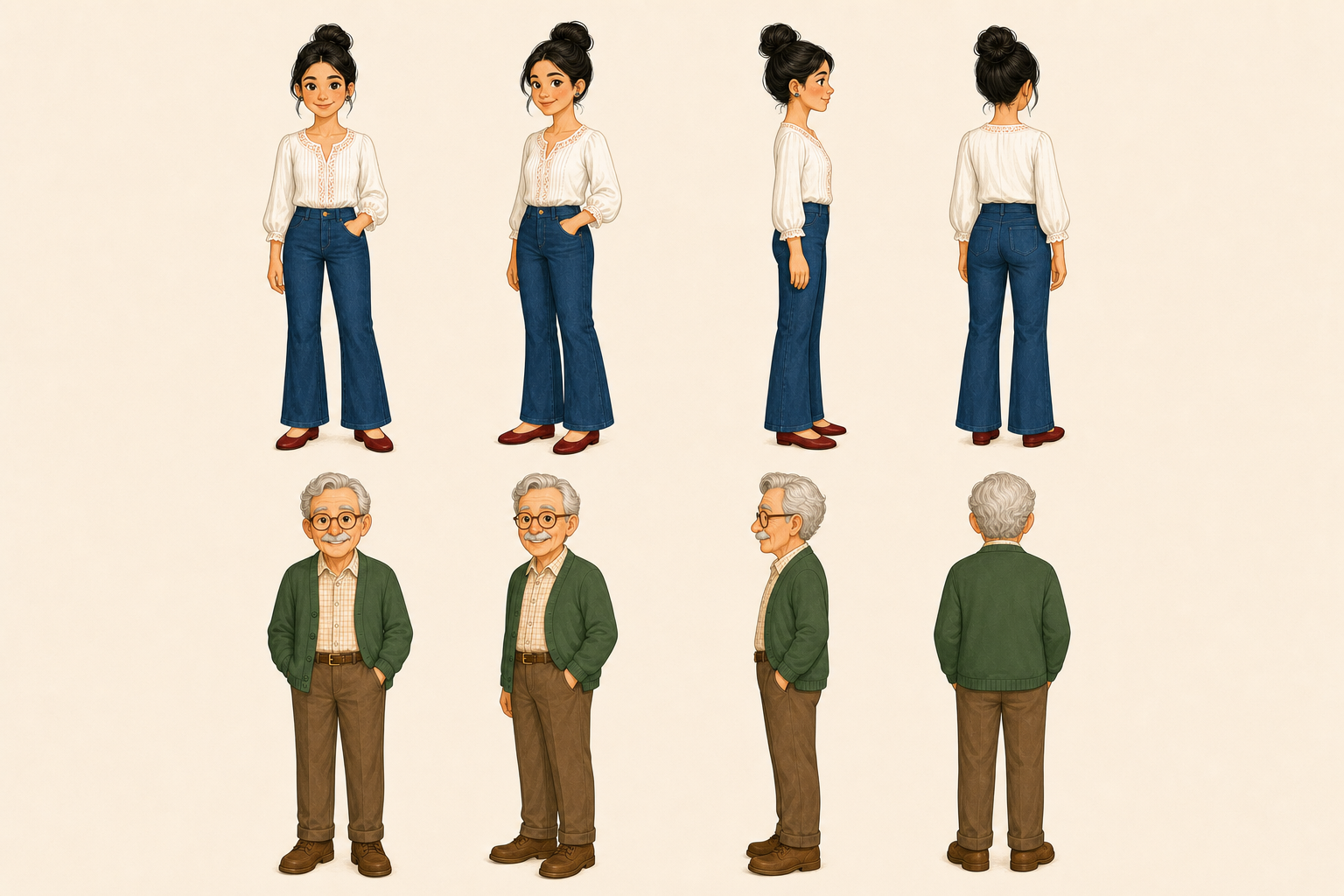
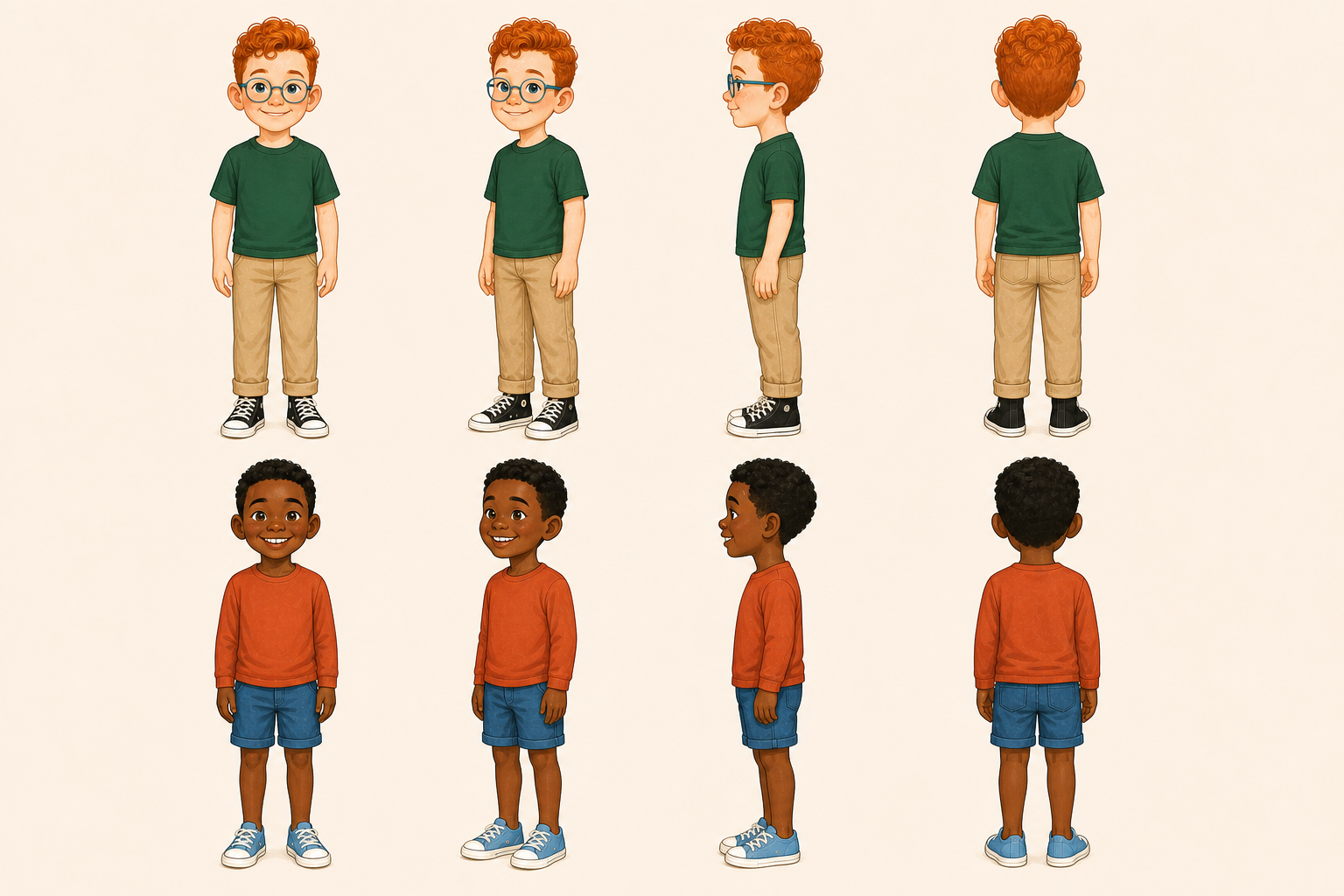
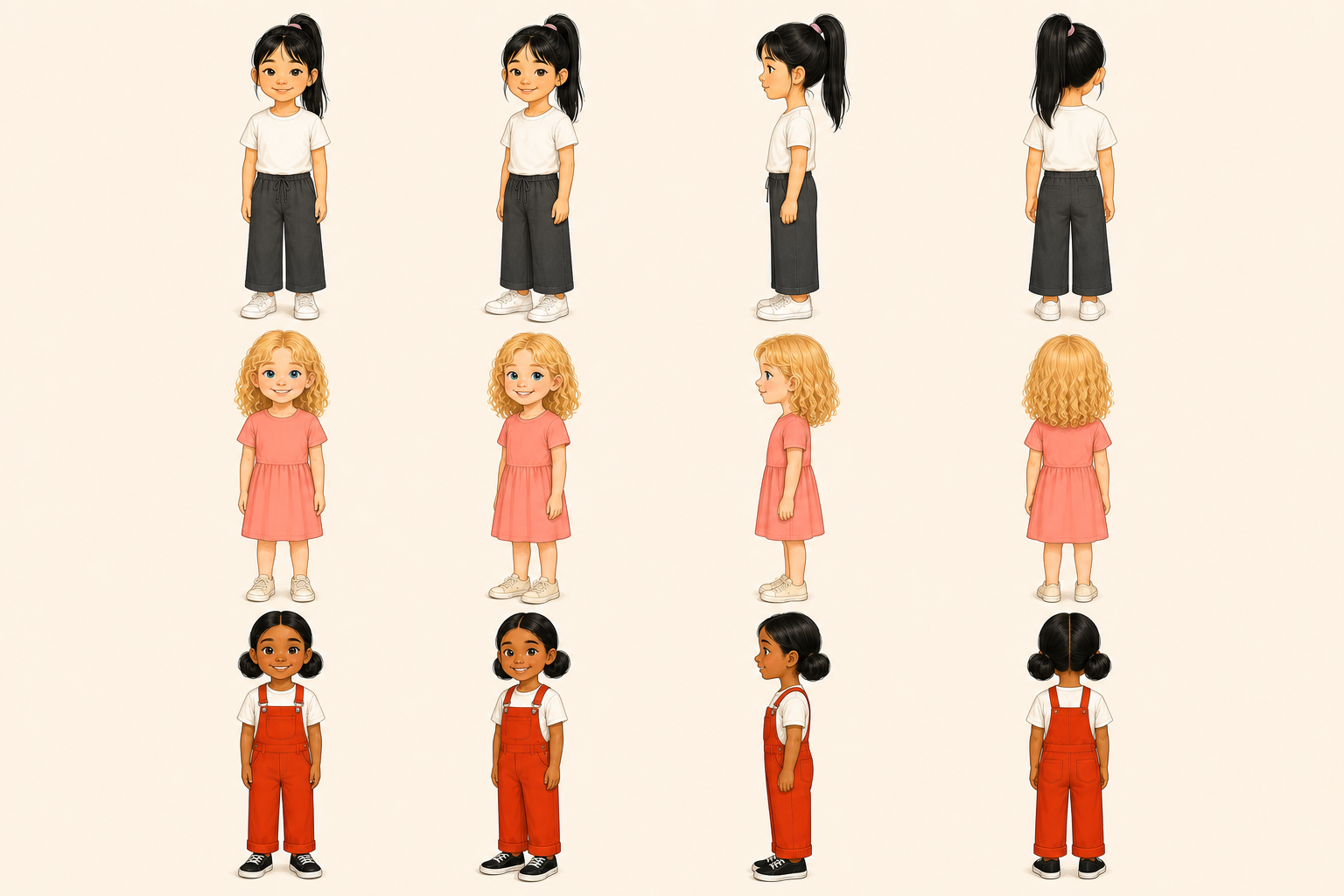
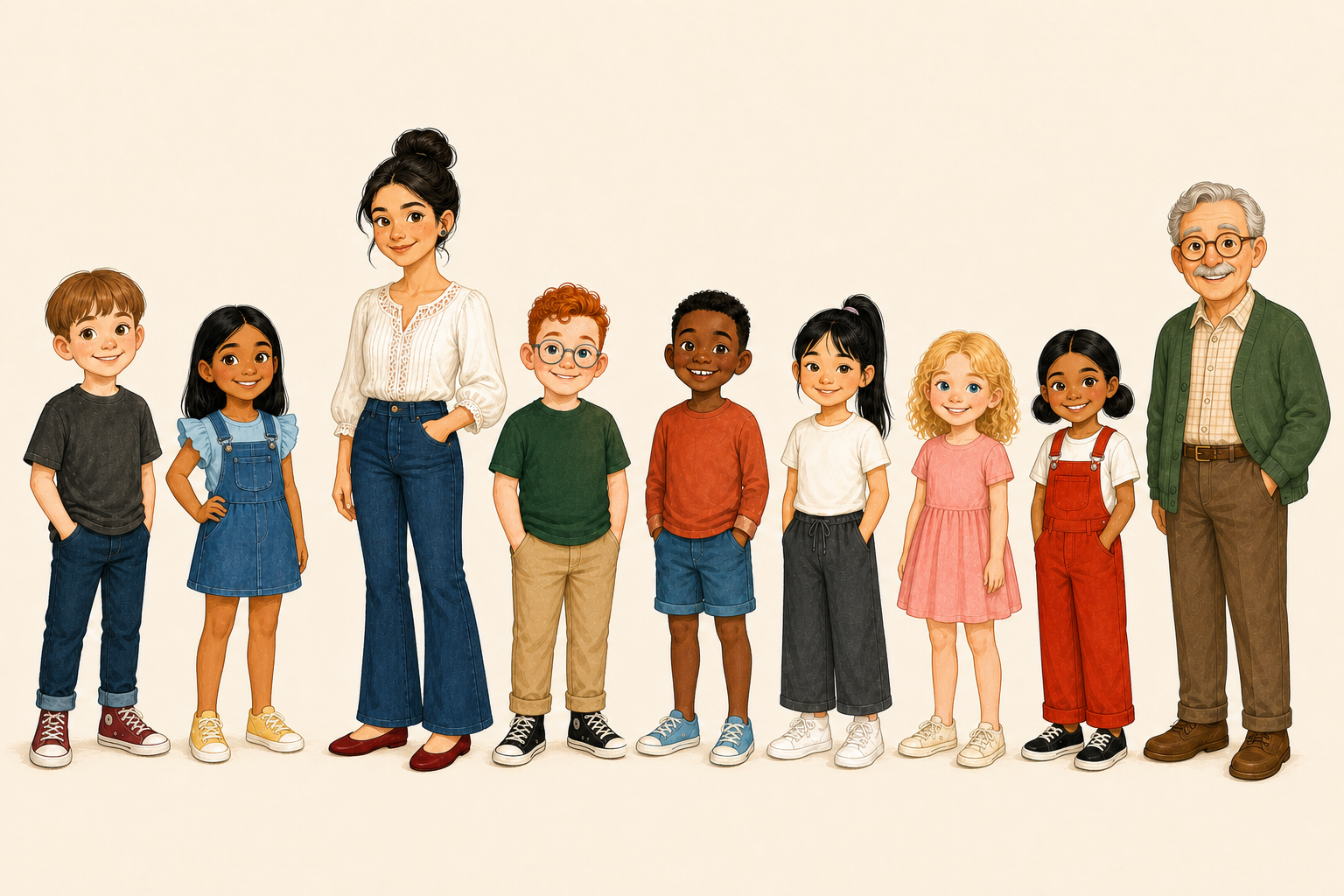
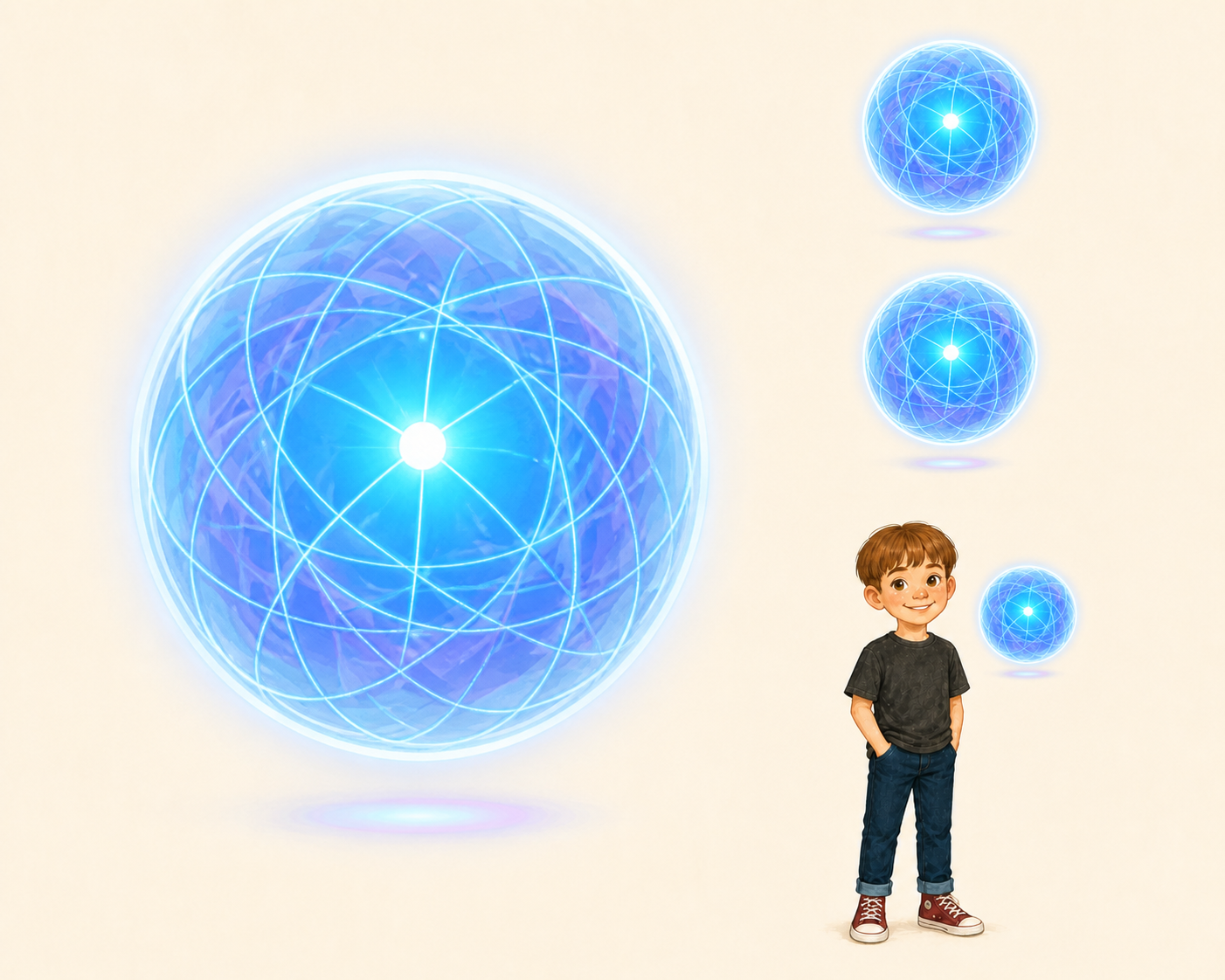
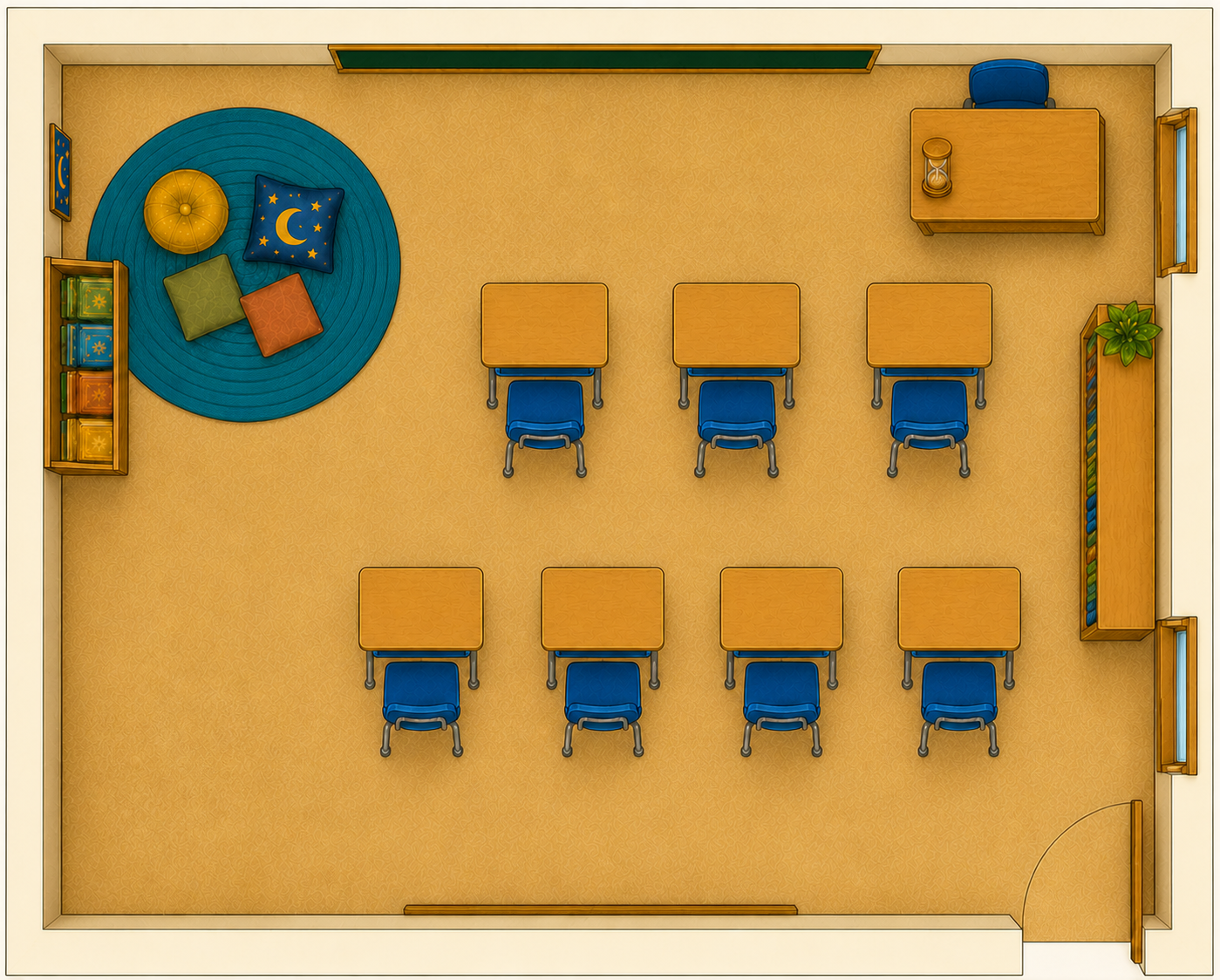
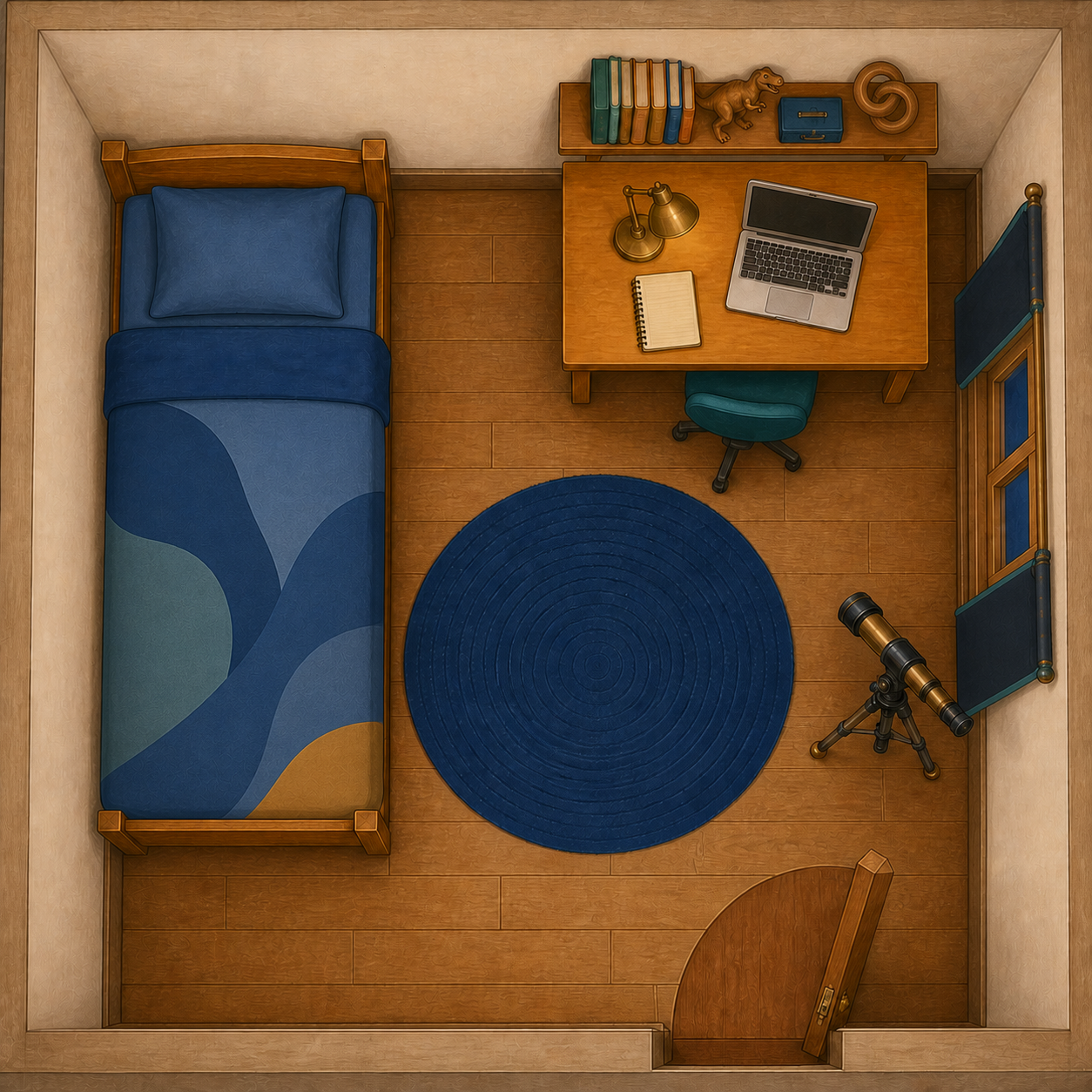
Eight locked references created one source of truth for character views, classroom layout, recurring objects, the AI orb, palette, and final rendering style.
The project required hundreds of small decisions. I checked whether a hand looked anatomically possible, a notebook faced the child instead of the reader, a recurring student still looked like the same person, and every text block stayed within the safe print area.
Faces, hair, proportions, skin tones, wardrobe, shoes, and recurring accessories.
Furniture, seating, classroom architecture, lighting, props, and the location of objects from page to page.
Hands, limbs, scale, posture, gaze, objects that cover part of the body, and natural contact with objects.
No repeated tile textures, accidental grain, leftover paint marks, blur, or inconsistent finish.
Expressions, project content, visual direction, pacing, and emotional progression.
Typography, visual hierarchy, margins, bleed, gutter safety, pagination, cover wrap, and Amazon KDP preview checks.
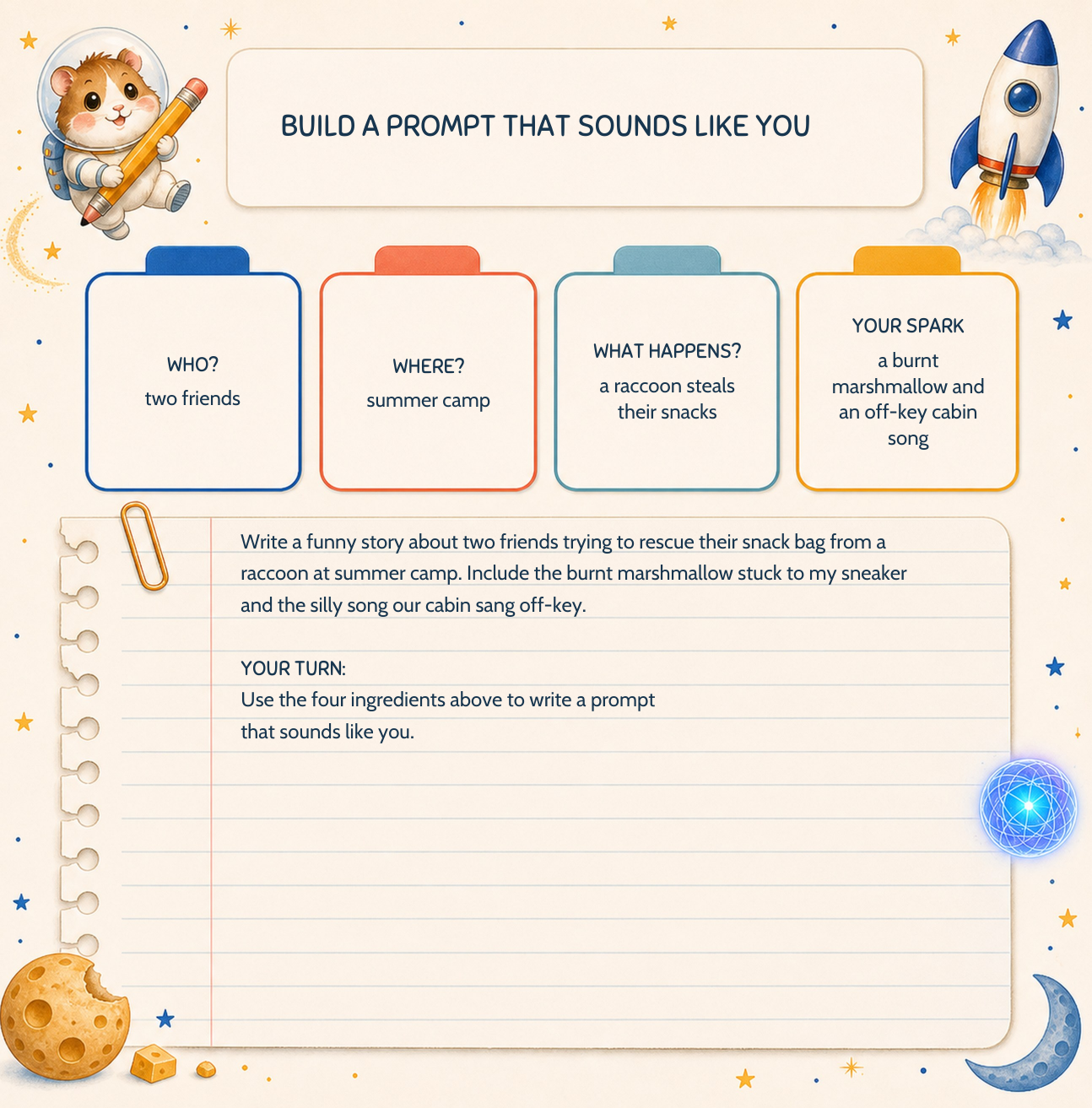
The final pages help young readers practice the lesson. They collect their own “spark,” compare generic ideas with personal ones, write a thoughtful prompt, question answers created by AI, and keep their own voice at the center of the process. A grown-up stays involved.
Nico and the Missing Spark brings the concept, writing, visual development, design, repeated quality review, production limits, and responsible AI disclosure into one published book.